What Is the True Meaning of Gratitude?

Hint: It’s deeper than making a list.
Have you ever looked up the definition of gratitude and thought… that’s it?
“The state of being grateful” doesn’t exactly stir the soul or explain why some people seem to glow with peace and joy, no matter what they’re facing.
So, what is the true meaning of gratitude?
Is it simply counting our blessings, the way we were taught as kids? Making a list of everything going right in our lives—food on the table, a warm bed, people who love us?
Or is there more to it?
I’ve been wondering: is gratitude something we feel… or is it something we become?
Is it an “attitude of gratitude”… a mindset… or a worldview? Or could it be a way of living, moment by moment—with a heart wide open to the beauty, the heartbreak, the ordinary wonders of life? Embracing it all at once, with appreciation?
Gratitude Through the Ages
Gratitude isn’t a new buzzword. Long before science caught on to its benefits, gratitude was considered one of the highest virtues by philosophers, poets, and spiritual teachers the world over.
Cicero once said, “Gratitude is not only the greatest of virtues, but the parent of all the others.”
In nearly every culture and faith tradition, gratitude has been revered as a spiritual path—a gateway to peace, perspective, and connection.

Want more? Read Before Journals and Hashtags: What Gratitude Looked Like Around the World for more information.
And now, modern science is catching up.
What Science Says Gratitude Really Is

Dr. Robert Emmons, one of the world’s leading researchers on gratitude, has spent years studying its effects on happiness, health, and relationships. He offers a beautiful two-part definition that, to me, feels both practical and profound:
- We affirm that there are good things in our lives—gifts and blessings we’ve received.
- We recognize that many of these good things come from outside ourselves.
Simple? Yes. But not always easy.
Because real gratitude, according to Emmons, isn’t about pretending everything’s perfect. In fact, he says:
“This doesn’t mean that life is perfect; it doesn’t ignore complaints, burdens, and hassles. But when we look at life as a whole, gratitude encourages us to identify some amount of goodness in our life.”
That’s what gets me. Gratitude doesn’t ask us to deny the hard stuff—it asks us to notice the good that coexists with the hard. To hold both at once.
And that second part—acknowledging that our blessings aren’t all self-made? That’s where humility is needed.
“We can appreciate positive traits in ourselves,” Emmons says, “but true gratitude involves a humble dependence on others: we acknowledge that other people—or even higher powers, if you’re spiritually inclined—gave us many gifts, big and small, to help us achieve the goodness in our lives.”
Isn’t that beautiful?
Want more? Here’s Dr. Emmons explanation, in his own words.
Living the Meaning of Gratitude
So, if we take this seriously—what changes?
Maybe it’s how we start the morning: pausing to breathe when we first open our eyes, to focus on feeling grateful before the day rushes in.
Or it’s how we see the people around us, not as obstacles or extras, but as givers of gifts, even in small ways.
It could be in how we speak: sincere, specific thank-yous. Eyes that meet. Words that acknowledge their effort.
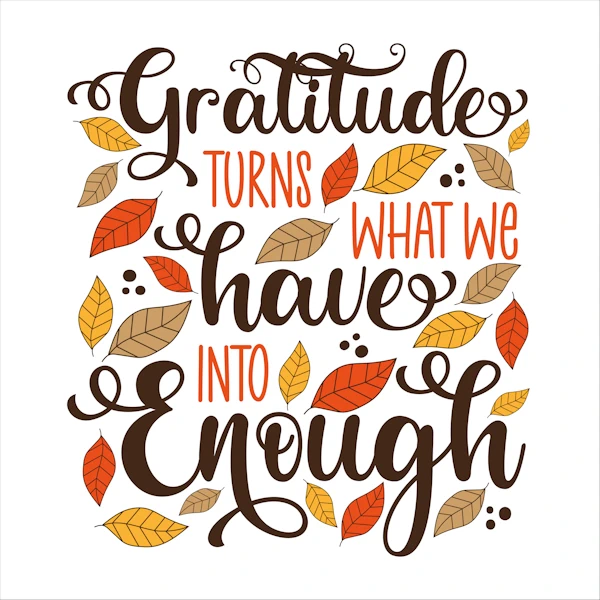
And it’s definitely in how we live our lives—with a deeper awareness of what we’ve been given, and a desire to live in a way that honors it all.

Want more?
If gratitude has been whispering to your heart lately, there’s more waiting for you. From one-minute (or more) journals, to simple daily practices, and stories that inspire, you’ll find a whole world of thankfulness to explore.
Feeling inspired to bring more gratitude into your everyday life? Whether you’ve just started your journey or want inspiration to embody gratitude, discover fresh ideas, journals, challenges, and more.
Before you go — check out our Gratitude Room full of reflections, tools, and treasures designed to help you see life through a softer, more thankful lens.